
Gemstone Identification
Aventurine: How to Identify, Value, and Compare It
Practical guidance on identifying aventurine from photos, what visible clues matter, and realistic secondhand value ranges for this quartz variety.
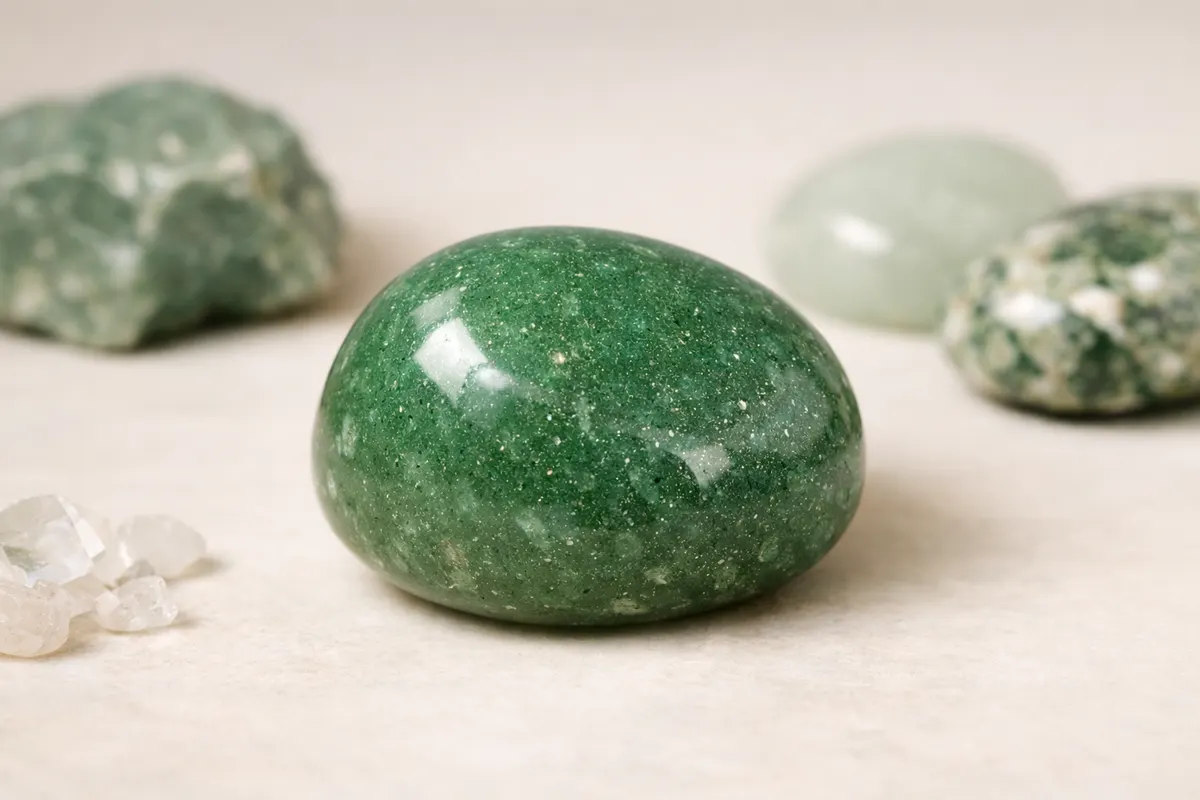
What aventurine is and where it forms
Aventurine is a variety of microcrystalline quartz that gets its most recognizable appearance from tiny plate-like mineral inclusions — commonly mica or hematite — that reflect light and create a glittery effect called aventurescence. It is used widely for beads, cabochons, tumbled stones, and carved ornamentals because that sparkly sheen is attractive at low cost.
Most commercial aventurine comes from deposits in India, Brazil, Russia, and parts of China, and it reaches the market as polished beads, flat cabochons for jewelry, and larger decorative pieces. The base material is quartz, so aventurine shares many of quartz’s physical properties, but its distinctive reflective inclusions set it apart in appearance.
Collectors and jewelers describe color ranges from pale gray-green through deep bottle-green and brown to reddish tones when iron inclusions predominate. One common retail label is green aventurine, the most frequently sold variety in beads and cabochons because the green shades photograph well and are familiar to buyers.
- Green aventurine is the common commercial variety and typically gets its color from fuchsite (a chrome-bearing mica) inclusions.
- Aventurescence (sparkle) comes from aligned, reflective platelets; the effect usually appears when the stone is tilted under light.
- Aventurine is a form of quartz (silicon dioxide) with a Mohs hardness around 6.5–7, so it resists everyday scratches better than softer minerals.
How can you tell if a stone is aventurine?
Photos can show several convincing clues for aventurine. The single most diagnostic visible trait is aventurescence: a glittering or shimmery chatoyancy caused by tiny, plate-like inclusions that catch the light. In well-lit photos taken at multiple angles you should see a fine, even sparkle moving across the surface rather than large reflective flakes.
Color and translucency are supporting clues. Aventurine typically ranges from slightly translucent to opaque; green tones are most common but brown, gray, and reddish varieties exist. Look for an even field of color with the sparkle distributed through the stone rather than isolated mirror-like chips that suggest glued-on glitter or glass.
Surface texture and cutting style also help. Aventurine sold for jewelry is often cut as cabochons or beads; cabochons will show the aventurescence as a patch or band. Unlike jade, which often shows a waxy, even, slightly greasy luster and fine fibrous structure, aventurine’s sparkle is granular and particulate under magnification.
Remember photographic limits: weight, specific gravity, and certain optical tests cannot be confirmed from an image. Use photos to form a first-pass ID and note any doubts for hands-on tests such as density checks, scratch tests (with care), or inspection under a loupe.
- Shoot at multiple angles in daylight or diffuse bright light to reveal moving aventurescence.
- Use a 10–20× loupe to check for tiny plate-like inclusions (mica/hematite) that cause sparkle.
- Look for even color fields with granular shimmer; isolated, mirror-like reflections suggest glass or coatings.
- Avoid assuming identity from color alone—green stones include many lookalikes that need additional checks.
Aventurine at a glance: key facts
This compact specs table summarizes the physical and commercial attributes collectors and buyers most often need when identifying aventurine from photos or deciding about care and resale.
Use the table as a quick reference for the measurable properties and typical jewelry uses; these values reflect the common commercial form of aventurine rather than every unusual specimen.
| Attribute | Typical value | Notes |
|---|---|---|
| Composition | Microcrystalline quartz + mica/hematite inclusions | Inclusions create aventurescence; base is SiO2 |
| Mohs hardness | 6.5–7 | Harder than common soft silicates but can chip with hard impact |
| Color range | Green, brown, gray, red | Green shades common commercially |
| Transparency | Opaque to slightly translucent | Aventurescence visible on cabochons and polished faces |
| Common jewelry settings | Beads, cabochons, pendants, carved stones | Often used in casual or fashion pieces |
| Care sensitivity | Moderate | Avoid strong acids/alkalis and ultrasonic cleaners for heavily included material |
- Composition: quartz with reflective inclusions (mica, hematite, or other platelets).
- Typical jewelry forms: beads, cabochons, simple settings, carved decorative pieces.
- Care sensitivity: moderate—resists scratches better than many silicates but avoid harsh chemicals and sharp impacts.
What aventurine typically sells for
Aventurine is generally an affordable gemstone in the secondhand and retail markets. Prices vary widely with piece type, finish quality, color saturation, and rarity of the inclusion that creates the shimmer. Use these ranges as conservative, secondhand-market guidance rather than formal appraisal numbers.
Drivers of value include strong, even aventurescence, deep saturated color (especially evenly distributed green), large intact cabochons or high-quality carvings, and absence of treatments or surface coatings. Market demand for beads and fashion jewelry keeps many pieces at lower price points compared with collector specimens.
| Tier | Typical resale range (USD) | What drives price |
|---|---|---|
| Tumbled stones | $1–10 each | Small size, common market supply, low finishing cost |
| Beads and small cabochons | $5–50 per piece/strand | Quality of color, evenness of aventurescence, hole finishing |
| Medium cabochons & jewelry pieces | $20–150 | Cut quality, color saturation, consistent shine |
| Large specimens / high-quality carvings | $100–500+ | Size, rarity of color/inclusions, workmanship |
- Higher-value pieces show bright, even sparkle across the entire stone and come from a single, intact specimen rather than assembled or glued material.
- Carved decorative pieces and large, well-matched bead strands command higher prices per piece than small tumbled stones.
- Surface treatments (dye or coating) reduce resale value; consistent natural sparkle and depth are positive indicators.
Stones commonly confused with aventurine
Aventurine is most often mistaken for other green stones and for glass. The visual giveaways you can check in photos are the type and distribution of surface reflections, the uniformity of color, and the nature of any included sparkle.
Jade (nephrite and jadeite) is a frequent lookalike: jade tends to have a smoother, more waxy luster and a fibrous or granular internal texture, not the particulate glitter of aventurine. For more on green stones and how they differ, consult the broader reference on Green Gemstones: Emerald, Peridot, Jade, and Lookalikes.
- Glass or heavily reworked man-made material: look for air bubbles, very bright mirror-like reflections, or an unnatural color saturation.
- Jasper and other green jaspers: usually lack aventurescence and display more earthy, opaque patterns rather than glittering platelets.
- Pyrite-bearing schists or coatings: visible metallic scales that do not align uniformly can mimic sparkle but often look metallic and flaky under magnification.
Care and handling for aventurine jewelry
Because aventurine is a form of quartz, it withstands everyday wear fairly well, but the reflective inclusions and polish can be damaged by harsh chemicals, hard knocks, and abrasive cleaners. Treat it as you would other chalcedony-type gems: gentle cleaning and safe storage.
Avoid strong acids, household cleaners with bleach, and prolonged exposure to heat that could affect color or surface coatings on lower-grade or dyed material. Ultrasonic cleaning is not recommended for heavily included or fractured specimens because vibrations can loosen platelets or internal structure.
- Clean with warm soapy water and a soft brush; rinse and dry with a lint-free cloth.
- Store stones separately in soft pouches or compartments to prevent scratches from harder gems or metal settings.
- For high-value or uncertain pieces, seek hands-on inspection before using aggressive cleaning methods.
Frequently asked questions
Aventurine vs jade: How can I tell which green stone I have from photos?
Photos can help but rarely give a final answer. Aventurine usually shows aventurescence — a granular, moving sparkle from aligned platelets — visible when the stone is tilted under light. Jade tends to show a more even, waxy or greasy luster and may display fibrous or interlocking texture and subtle translucency near edges. High-resolution, well-lit images at multiple angles can indicate which you likely have, but physical tests (density, feel, or professional gem testing) are needed for certainty.
Can I identify aventurine from a photo alone?
A photo can provide strong evidence—particularly if it clearly shows consistent aventurescence and expected color—but it cannot prove authenticity or rule out lookalikes like glass or coated materials. Use multi-angle, high-resolution images in daylight to check for the glittery inclusions, then treat the result as a preliminary ID that should be confirmed with hands-on inspection if the stone’s identity affects sale or insurance decisions.
Are aventurine stones commonly treated or dyed in the market?
Some lower-grade pieces are dyed or surface-treated to enhance color and sparkle; this is more common in inexpensive beads and mass-produced cabochons. Signs of treatment include unnaturally uniform color, dye pooling in drill holes, or a surface sheen that peels or wears off. When possible, inspect bead holes, edges, and fractures at magnification for dye or coatings before accepting valuation claims.
What is the best way to photograph aventurine so an expert can check it?
Photograph the stone in diffuse daylight and include shots at several angles to reveal moving aventurescence. Take a close-up with a macro or phone macro lens, a straight-on image of the face, and a tilt shot that shows the shimmer. Include a plain neutral background and a scale reference (ruler or coin). These images help visual ID but remember that hands-on tests are needed for final verification.
Related guides
Compare your stone using Stone Identifier - Gemalyze
Use the Stone Identifier - Gemalyze iOS app as a first pass to compare photos of your piece against the aventurine clues on this page. The app can highlight visual matches and suggest likely lookalikes, but it can’t replace hands-on testing. Treat app results as an informed starting point and follow up with in-person checks or a professional appraisal if value or authenticity matters.
Take the next step →