
Gemstone Identification
Fluorite: How to Recognize It, Photo Clues, and Typical Value
Learn what fluorite is, clear photo clues to recognize it, and realistic secondhand value ranges. Practical visual checks, limits, and safe next steps.
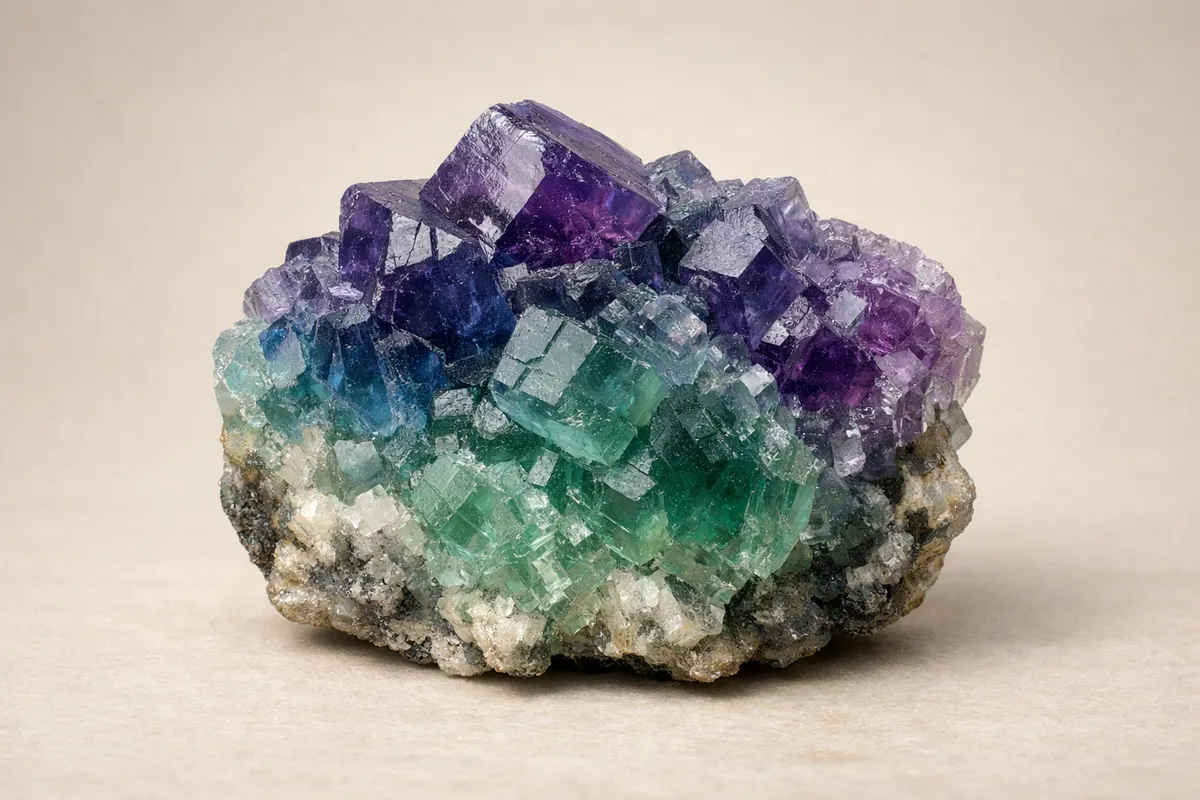
What fluorite is and where it’s used
Fluorite is the mineral calcium fluoride (CaF2). It forms well-shaped cubic or octahedral crystals and appears in an unusually broad range of colors — purple, green, blue, yellow, and clear are common. In geology it’s a common mineral in hydrothermal veins and sedimentary deposits; in collections and jewelry it is valued more for color and crystal form than for durability.
Because fluorite has a relatively low hardness (about 4 on the Mohs scale) it is fragile compared with gemstones made for daily wear. Collectors prize large, transparent crystals and specimens that show sharp color zoning or banding. In jewelry you’ll most often see fluorite cut as cabochons, beads, or polished display stones rather than faceted rings for everyday wear.
Fluorite’s optical behaviors — strong cleavage, bright fluorescence under shortwave or longwave UV, and distinct color zoning — are central to why it’s recognized and collected. Those same features are the practical clues you can often spot in a phone photo, but they are not substitutes for laboratory testing when identity or value matters.
How can you tell a photo shows fluorite?
Photographic checks narrow possibilities quickly. Start with color and zoning: fluorite commonly shows sharp color bands, ghost zones, or patches of different hues inside the same crystal. Photos that reveal layered color — for example purple over green — are instantly suspicious for fluorite rather than single-tone gems.
Look for cleavage and crystal faces. Fluorite cleaves octahedrally and often shows planar break surfaces or small triangular cleavage planes on a broken crystal. In close-up photos a flat, stepped cleavage plane or a cubic crystal face is a strong visual signal for fluorite.
Fluorescence under UV is a hallmark: many fluorite specimens glow blue, purple, or other colors under shortwave or longwave UV. If the owner can supply a UV-lit photo, a clear fluorescence reaction supports identification, though it’s not definitive because other minerals can fluoresce too.
- A short fluorite identification checklist helps: color zoning, perfect cleavage planes, low hardness signs (scratches or chips), and fluorescence under UV.
- Surface wear and chips are common; a polished cabochon with many nicks suggests a soft mineral like fluorite rather than quartz or topaz.
- Transparency varies: transparent to translucent stones with saturated color pockets are typical; uniformly saturated, highly refractive faces are less likely in fluorite.
- Compare size and crystal habit in photos: large glassy cubes or octahedra with visible growth lines usually point to mineral specimens rather than cut gems.
Key facts
The table below summarizes technical attributes that matter for visual checks and safe handling. Photo clues in the third column are the kinds of details you can expect to spot with a decent close-up image.
Use the table to prioritize which additional photos to request: a UV-lit shot, a side view showing cleavage, and one that captures any banding or internal zoning.
| Attribute | Typical value | Photo clue |
|---|---|---|
| Composition | Calcium fluoride (CaF2) | Glassy faces; cube or octahedron crystal shapes |
| Hardness | 4 (Mohs) | Easy to scratch; chips and softened facet edges in close-up photos |
| Cleavage | Perfect octahedral | Triangular cleavage planes, stepped breaks, flat planes |
| Specific gravity | ≈3.0–3.3 | Looks lighter than similarly sized quartz in hand photos |
| Common colors | Purple, green, blue, yellow, colorless | Strong color zoning, banding, or ghost zones visible inside stone |
| Optical effects | Fluorescence often present | Bright glow under UV-light photos supports identification |
Secondhand value tiers and what affects price
Fluorite’s market value is driven by size, color saturation, clarity, and whether the piece is a collector specimen or cut for jewelry. Because fluorite is soft and often included, well-preserved museum-quality crystals or strikingly banded specimens command the highest prices per piece. For jewelry, skillful polishing and attractive color can lift small pieces into modestly valuable ranges, but expect lower resale values than harder gemstones.
Secondhand markets vary by region and platform. Online auction and specimen-focused marketplaces list a wide spread: small, common beads and tumbled stones sell for modest sums, while rare large crystals with deep, uniform color or exceptional banding sell to collectors at a premium. The table below gives typical secondhand ranges and the main drivers behind them. These ranges are illustrative and not a formal appraisal.
| Tier | Typical secondhand range | What drives price |
|---|---|---|
| Low | $2–$30 per piece or per carat for small beads/tumbled stones | Common colors, small size, polish only; heavily included |
| Mid | $30–$200 for larger cabochons, decent clarity, or small display crystals | Attractive color, good polish, careful cutting or intact small crystals |
| High | $200–$2,000+ for large, transparent, richly colored crystals or showy banded specimens | Large size, deep saturated color, sharp crystal habit, unusual zoning |
| Specimen/Collector | Prices vary widely; select museum pieces can exceed $5,000 | Exceptional size, rare color combinations, provenance, or display quality |
Stones commonly mistaken for fluorite and how to tell
Fluorite is frequently confused with other purple, green, or blue stones. Amethyst (purple quartz) is a common lookalike: amethyst is harder (7 Mohs), lacks octahedral cleavage, and seldom shows the sharp banding patterns typical of fluorite. In photos, amethyst tends to hold facet edges and resists chipping, while fluorite shows more surface wear.
Light blue green stones such as aquamarine or green beryl are also mistaken for fluorite in low-resolution images. Beryl varieties are harder and often exhibit higher clarity and different refractive behavior. When you can, request a close side view and a magnified photo of the surface: pronounced cleavage planes point to fluorite, while strong brilliance and crisp facets point away from it.
- Amethyst (purple quartz): check hardness clues and lack of cleavage; quartz keeps sharp facet lines.
- Glass and synthetic materials: glass can mimic color and transparency but lacks the predictable octahedral cleavage of fluorite.
- Calcite: softer than fluorite with rhombohedral cleavage; calcite may show double refraction in clear fragments.
- Topaz or aquamarine: higher hardness and different brilliance; look for facet retention and lack of easy chipping.
Care and handling specific to fluorite
Treat fluorite as a fragile material. Its Mohs 4 hardness and perfect cleavage mean it chips and scratches easily. Avoid ultrasonic cleaners and steam cleaning; these can damage cleavages or surface polish.
Protect fluorite jewelry from knocks and hard wear: pendants and earrings are safer than rings for daily use. Store fluorite pieces separately padded from harder gems and metals to prevent abrasion. When photographing, a small, diffused light source and a macro or close-up shot will show the signs of wear and cleavage that matter for visual identification and valuation.
- Avoid heat and prolonged direct sunlight for intensely colored specimens — some colors can fade over time.
- Clean gently with a soft cloth and mild soap; rinse quickly and dry immediately.
- When handling specimen crystals, support cleavage planes to prevent accidental splits.
Frequently asked questions
How reliable is a phone photo for identifying fluorite?
A phone photo can show many strong clues — color zoning, cleavage planes, chips from low hardness, and fluorescence under UV if a UV-lit image is provided — but it cannot prove identity with lab certainty. Photos are useful for a first-pass assessment and to decide which additional angles or tests (UV reaction, hardness scratch test, or a specific gravity check) to request before accepting a purchase or a valuation.
Can fluorite be mistaken for amethyst or other purple gems when selling?
Yes. In online listings and casual photos purple fluorite can look like amethyst or even dyed quartz. Sellers and buyers should compare surface wear, cleavage, and facet retention: amethyst keeps sharp facet edges and resists scratching, while fluorite often shows chips, softened edges, and visible cleavage planes in close-ups.
What should I know about rainbow fluorite when checking a photo?
Rainbow fluorite shows multiple color bands — for example purple and green stacked in sharp layers — and that banding is a reliable photographic sign of fluorite. When evaluating a rainbow-fluorite photo, ask for images that show the color transitions edge-on and under diffuse light so the zoning is clear; provenance and context (mining locality or specimen label) also help establish collector value.
Are the value ranges in this guide accurate for resale online?
The ranges reflect typical secondhand outcomes but are indicative, not definitive. Online resale depends on condition, photos, platform fees, and buyer demand. Use the visual clues listed here to refine expectations: intact crystal habit, deep saturated color, and unusual banding increase sale prices; heavy wear, fractures, or small size usually reduce them.
Related guides
Compare your photo against fluorite clues
If you want a practical first pass, Stone Identifier - Gemalyze can help compare your photograph to the visual clues in this guide. Use the app as one more check after you’ve gathered close-up views (cleavage, side profiles, and any UV-lit images). The tool at https://stoneidentification.app/tools/gemstone-identifier is designed to highlight likely matches and suggest next steps — but remember a photo-based result is a helpful indication, not a lab certificate.
Take the next step →