
Stone Identification
Jasper: Identification, Value, and Real Examples
Practical, photo-focused guidance on jasper stone: what it is, visible ID clues, resale value ranges, and safe next steps before you rely on a single picture.
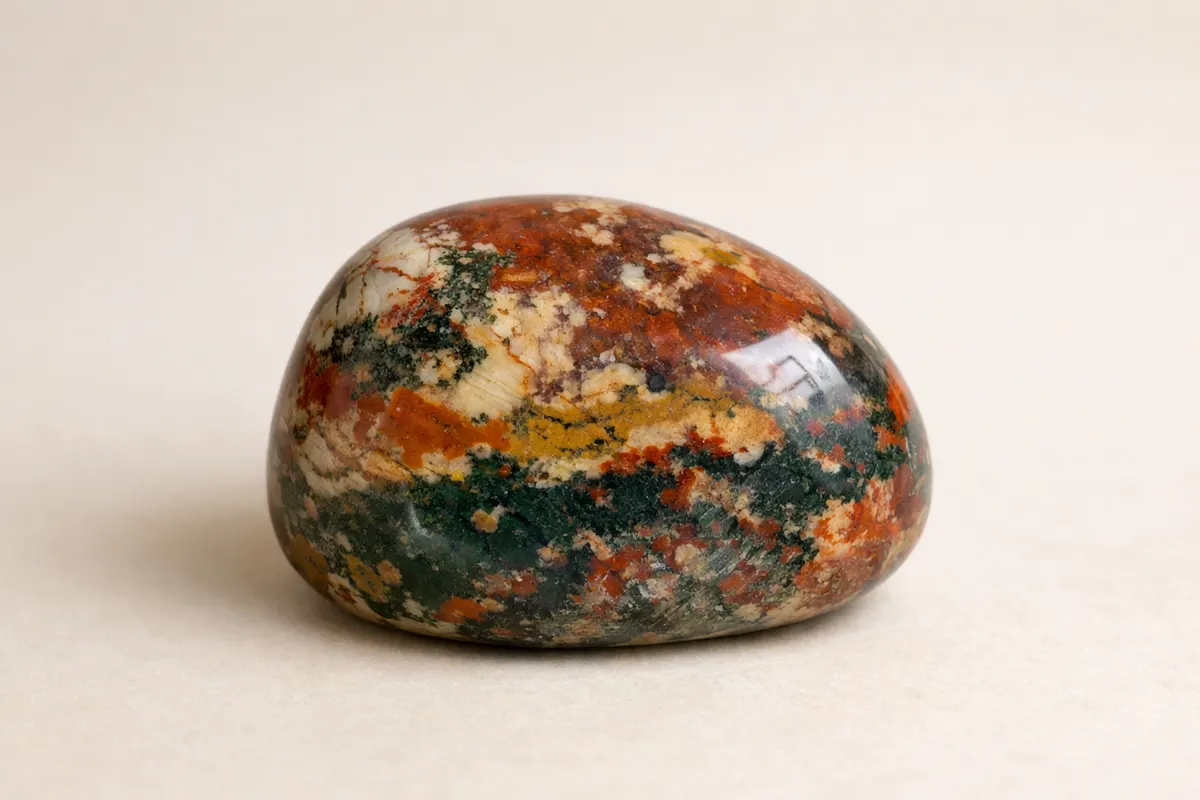
What a jasper stone is and where it comes from
A jasper stone is an opaque, microcrystalline variety of chalcedony composed mostly of silica with abundant microscopic mineral or organic inclusions that produce mottled colors, speckles, and patterns. Unlike transparent quartz, jasper is prized for its surface patterns—spots, swirls, and sometimes very regular banding—rather than clarity.
Jasper forms when silica-rich sediments or volcanic ash become cemented and then recrystallize at low temperatures. Common sources include sedimentary deposits and hydrothermal veins worldwide; historically notable deposits come from places such as India, Madagascar, Russia, and the western United States. Locality can influence typical colors and pattern styles but rarely guarantees value on its own.
In jewelry, jasper is usually cut en cabochon, carved into beads or cameos, or used as decorative inlay. Its hardness around 6.5–7 Mohs makes it suitable for everyday wear in rings and pendants when properly set, though the stone’s value is driven by pattern quality, polish, and rarity of color or pattern rather than by transparency.
Collectors and designers value jasper for distinctive patterns—picture jasper, ocean jasper, and brecciated varieties are sought after for specific aesthetic uses. For photo-led identification and appraisal work, focus on pattern, polish, and any signs of stabilization or resin treatment that can alter appearance in images.
- Composition: microcrystalline silica (chalcedony) with inclusions of iron oxides, clay, or organic matter.
- Common uses: cabochons, beads, carvings, inlays—most often sold by pattern and polish quality.
- Durability: moderate to good for jewelry; resistant to daily wear but sensitive to strong acids and sudden thermal shock.
How can you tell a jasper stone from a photo?
Photos can show many reliable clues for jasper stone identification, especially when they include multiple angles, scale, and a close-up under soft, diffuse light. Look for opaque body color with no windowed transparency, a waxy to dull vitreous luster after polish, and surface patterns made of mineral spots, dendrites, or sedimentary banding rather than crystalline faces.
Examine the surface pattern closely: jasper typically shows interrupted or diffuse patterns—clouds, spots, and breccia textures—rather than the concentric, very regular bands of agate. A hand lens in a photo or a macro crop can reveal tiny granular texture from the microcrystalline silica and embedded mineral grains.
Check edges and drill holes in bead photos. Natural jasper chips and drill holes have irregular fractures and compacted grain; perfectly smooth or fibrous internal structure can indicate glass, plastic, or synthetic resin. Also note how light behaves: jasper is opaque, so specular highlights come from polish, not internal depth.
A single photograph rarely proves origin or treatment. If the image shows an odd surface sheen, visible bubbles, or seam lines, suspect stabilizing resin, glass, or manmade composites. When possible, compare against reference examples of named varieties to see if the pattern distribution matches documented samples.
- Opacity and luster: opaque body, waxy-to-vitreous polish highlights.
- Surface texture: granular microstructure visible in close-up macro photos.
- Pattern cues: mottling, breccia, or picture-like landscapes; look for diffuse rather than perfectly concentric bands.
- Edge and drill checks: natural chips have irregular fracture; smooth seams or bubbles suggest synthetics.
- banded jasper: look for alternating colored layers that are less glassy and more granular than agate bands.
Key facts and quick specs for jasper stone
This compact table summarizes the technical ID facts that matter most when you only have photos. Use the values below to compare visible clues—hardness and transparency are testing anchors, while composition and typical settings explain how the stone is commonly encountered in jewelry and decor.
| Attribute | Typical | Notes |
|---|---|---|
| Composition | Microcrystalline silica (chalcedony) | Includes iron oxides, clays, organic inclusions that form patterns |
| Mohs Hardness | 6.5–7 | Hard enough for many jewelry uses; resists scratching from soft metals |
| Transparency | Opaque | No internal windowing—light reflects off the surface polish |
| Specific Gravity | 2.58–2.91 | Denser than most common jaspers when measured carefully |
| Common Forms | Cabochons, beads, carvings, slabs | Often polished to show pattern; rarely faceted |
| Typical Settings | Bezel-set rings, pendants, statement cuffs | Patterns make strong focal pieces; large slabs used in decor |
| Care Sensitivity | Stable to mild cleaners, avoids acids and heat shock | Can be treated with resin; look for unnatural shine in photos |
- Use a scale or coin in photos for size and a diffuse light source to reduce glare.
- Spectral color in photos can shift with camera white balance; rely more on pattern and texture than precise hue.
What a jasper stone typically sells for on the secondhand market
Resale values for jasper stone vary widely. Most commercial-grade jasper used in common cabochons or beads sells modestly; exceptional pieces with rare patterning, large size, or provenance can command significantly higher prices. Treat any photo-only value estimate as indicative rather than definitive—auction records and specialist dealers are the best next step for high-end material.
Typical drivers of resale value are pattern uniqueness, polish quality, size of the finished piece, and whether the variety is in demand (for example ocean jasper or highly graphic picture jasper). Treatment status matters: stabilized or resin-filled pieces generally sell for less than untreated, well-polished natural material.
Secondhand shoppers often buy jasper by the piece rather than per-carat, so small, well-cut cabochons can fetch higher per-gram prices than large, low-quality slabs. If you need a firmer market gauge, compare recent listings for similar-looking specimens rather than relying on a single comparable sale.
| Tier | Typical Resale (used market) | What Drives It |
|---|---|---|
| Everyday | $2–$15 per cabochon / $5–$40 per bead string | Common patterns, small sizes, mass-market polish |
| Mid-range | $20–$150 per piece | Clearer pattern, larger cabochons or designer settings |
| High | $150–$1,000+ | Rare, highly graphic patterns, large slices or museum-quality pieces |
| Collector/Specimen | Varies widely; specialized auction pricing | Unusual localities, exceptional size or pattern, documented provenance |
- Value is comparative: similar pattern, size, and polish guide market pricing.
- Treatments lower resale value; ask sellers about stabilization or resin.
- Provenance or named locality can increase demand but rarely guarantees high prices.
Stones jasper is commonly mistaken for — photo differences
Jasper is often confused with other opaque chalcedonies, agate varieties, and altered volcanic rocks. In photos, the most useful distinguishing cues are the regularity of banding, the presence of crystalline structure, and internal bubbles or seams indicating manmade glass.
Agate (banded chalcedony) shows very regular, translucent-to-opaque bands with clear layering and occasional translucency near edges; jasper bands tend to be more diffuse and granular. Unakite and some rhyolites can resemble jasper's mottling but usually have a different mineral grain visible under magnification.
Dark or black jasper can be mistaken for other black ornamental stones. For visual checks on dark specimens—luster, streak, and texture—consult Black Stone Identification: Luster, Streak, Texture, and Weight for side-by-side photo clues.
Synthetic or stabilized composites may mimic jasper patterns but reveal manufacturing signs in close-up photos: uniform pores, visible resin sheen, or bubble clusters. Always request macro detail and edge views when authenticity matters.
- Agate vs jasper: agate often translucent with concentric bands; jasper opaque with granular bands.
- Unakite/epidote mixes: greener hues and different grain under magnification.
- Glass and plastic: often show bubbles, overly smooth inner surfaces, or seam lines.
Care and handling advice for jasper stone
Clean jasper with warm water, a mild detergent, and a soft brush; avoid ultrasonic cleaners if the stone has visible fractures, porous spots, or suspected resin stabilization. Dry gently and avoid steam or high heat which can crack or alter treated pieces.
Store jasper separately from harder gems to prevent scratching of the polish. For cabochons set in everyday rings, periodic inspection of the setting is important—jaspers are durable but can suffer chips on exposed edges if caught on hard surfaces.
If you suspect a piece is stabilized or resin-filled based on photos (unnaturally high gloss, visible flow lines), treat it as lower value and avoid aggressive cleaners; ask a lapidary or gemologist for treatment testing if resale or conservation is a concern.
- Cleaning: mild soap and soft brush; avoid acids and heat.
- Storage: padded compartment, separate from harder stones.
- Handling: check mounts and settings; large slabs may require special supports.
Frequently asked questions
How should I start jasper identification when I only have one phone photo?
Begin by photographing the piece in diffuse daylight with a scale (coin or ruler) and include a close-up macro crop of the pattern and any edges or drill holes. Look for opacity, granular texture, and whether patterns are diffuse (typical of jasper) versus perfectly concentric bands (more typical of agate). Note any bubbles, seams, or unnaturally glossy areas that suggest glass or resin. Use these visual clues as a first pass and treat photo-only results as tentative; if the stone might be valuable, follow up with hands-on inspection or an app-assisted comparison.
Can a photo tell me whether my jasper stone is treated or natural?
Photos can show strong hints of treatment—visible surface resin sheen, flow lines, color saturation that looks uniform, or small bubble clusters often indicate stabilization or composite work. However, some treatments are subtle and require hands-on tests (hot needle for polymers is unsafe for jewelry) or lab equipment. Use photographic signs as a flag to request more information from the seller or to have an in-person inspection before relying on value claims.
What visual signs suggest a jasper stone is worth more than typical prices?
Higher value jasper typically shows exceptional, coherent patterns that read well at the finished size (dramatic picture scenes, rare orbicular patterns), excellent polish with minimal surface pits, and larger intact slices or cabochons with minimal inclusions that interrupt the pattern. Named varieties or documented locality can add collector appeal. Photographs that show a stone’s full pattern at the actual worn size help buyers judge whether the piece stands out enough to command premium pricing.
How can I safely check a purchased jasper piece at home for obvious authenticity issues?
Start with visual checks: examine edges and drill holes under magnification for glassy seams or bubble clusters, test hardness indirectly by noting whether a steel tool scratches a discreet, non-visible spot (only if you accept risk), and compare the stone’s behavior in light—jasper stays opaque while glass may show translucency at thin edges. When in doubt, seek a lapidary or reputable appraiser rather than aggressive home tests that can damage the piece.
Related guides
Compare your photo against jasper clues in the Stone Identifier - Gemalyze app
Use Stone Identifier - Gemalyze on iOS as a guided first pass: take the same photos suggested above, then compare pattern, luster, and edge clues against our jasper examples. The app can highlight photo-matching features and show likely lookalikes so you know which follow-up checks to do next. Remember: an app-assisted check is a helpful first step but not a substitute for hands-on inspection or a formal appraisal when value or authenticity matters.
Take the next step →