
Gemstone Identification
Pyrite: Identification, Value, and Real Examples
A practical guide to pyrite: what it is, visible clues for identification, typical resale ranges, and how to photograph specimens for safe next checks.
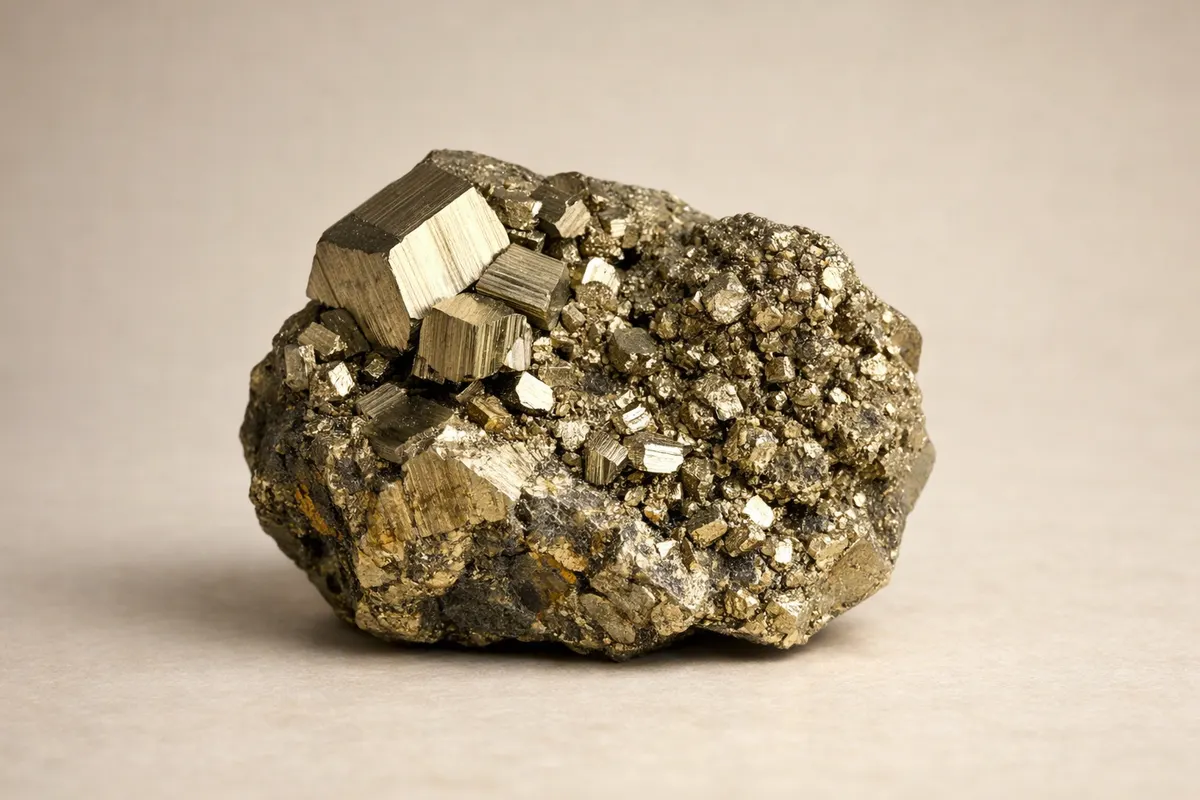
What pyrite is and how it's used
Pyrite is a common iron sulfide mineral (chemical formula FeS2) known for its metallic, brassy-yellow appearance. It forms distinctive cubic or pyritohedral crystals, masses of tiny intergrown cubes, and sometimes crystalline crusts that make attractive display specimens.
In jewelry and decorative uses pyrite is usually a display or accent material rather than a precious metal: it’s cut into cabochons, set as polished pebbles, or left as natural crystal clusters for pendants and home specimens. Its bright metallic look has long made it popular for inexpensive jewelry, costume pieces, and mineral collections.
Geologically, pyrite forms in a wide range of environments — hydrothermal veins, sedimentary rocks, and volcanic deposits — so it’s one of the most commonly encountered metallic minerals in field finds and estate collections.
How can you tell if a specimen is pyrite?
Start with the visible cues: pyrite has a brassy, yellow-gold metallic luster that often looks slightly paler and more reflective than common gold. Look for geometric faces and small cubes or clusters of cubes — pyrite commonly forms well-defined cubic crystals that catch light on flat faces.
Do a streak check when a small sample or inconspicuous edge is available: pyrite’s streak (the color of its powdered form) is typically greenish-black to brownish-black, while native gold leaves a yellow streak. A streak test is one of the simplest, photo-checkable comparisons if you can photograph the streak on unglazed ceramic or describe it to an expert.
Check physical behavior: pyrite is brittle and will shatter or powder when struck; gold is malleable and will deform without breaking. Pyrite’s hardness is about 6–6.5 on the Mohs scale — it can scratch glass — and its specific gravity (~4.9–5.2) is noticeably lighter than gold’s. Pyrite is not strongly magnetic, but some natural specimens contain iron oxides that respond to a magnet, so magnetism is not a definitive test.
Surface clues visible in photos include cube faces, visible cleavage or fracture patterns, and early signs of oxidation (brown or reddish staining from iron oxides). For jewelry, look at setting behavior: pyrite crystals may be glued or set in protective bezels because the mineral can chip. When possible, photograph the specimen from multiple angles, include a ruler or coin for scale, and take detail shots of crystal faces and any worn edges.
- Color and luster: brassy, metallic, often with geometric crystal faces.
- Crystal habit: cubes, pyritohedra, or intergrown crystalline masses.
- Streak: greenish-black to brownish-black (photo-checkable if described).
- Hardness & fragility: ~6–6.5 Mohs; brittle and will flake rather than bend.
- Density: noticeably heavy but lighter than gold (specific gravity ≈ 4.9–5.2).
- Oxidation: brown or rusty stains on and around the specimen over time.
Key facts and technical specs for pyrite
The table below summarizes the technical attributes collectors and buyers most often check when identifying pyrite from photos or brief descriptions. These are visual and testable features; laboratory confirmation requires chemical or X-ray analysis.
Use these specs as a quick-reference checklist: confirm crystal habit and streak first, then consider hardness and weight if you can handle the piece or describe handling tests for an expert review.
| Attribute | Typical value |
|---|---|
| Composition | Iron sulfide (FeS2) |
| Crystal system | Isometric — commonly cubic or pyritohedral crystals |
| Hardness | 6–6.5 Mohs |
| Streak | Greenish-black to brownish-black |
| Specific gravity | Approximately 4.9–5.2 |
| Common uses | Mineral specimens, costume jewelry, decorative inlays |
| Care sensitivity | Rust/oxidation in moist environments; brittle |
What pyrite typically sells for on secondhand markets
Pyrite has value as both a collector mineral and as decorative jewelry material, but its retail and resale prices vary widely with size, crystal quality, and the rarity of the formation. The figures below are broad secondhand-market tiers to give a realistic sense of typical ranges; they are not appraisals and depend heavily on condition, provenance, and local demand.
Smaller tumbled pieces and low-grade mineral lumps are common and inexpensive, while large, well-formed cubic clusters or museum-quality specimens can command significantly higher prices. Jewelry-setting, whether the specimen is a polished cabochon or a natural cluster, also affects buyer interest and price.
| Tier | Typical range (USD) | What drives value |
|---|---|---|
| Bulk/low-grade specimens | $1–$25 | Mass, lack of distinct crystals, sold by weight |
| Good crystal clusters (small–medium) | $20–$200 | Distinct cubes, aesthetic grouping, minimal damage |
| Display or large specimen | $200–$2,000+ | Size, rare habits, excellent luster and intact faces |
| Jewelry pieces | $10–$300 | Cut/polished finish, setting quality, market fashion |
Pyrite vs gold: photo cues to tell them apart
Pyrite is often mistaken for native gold because of its shiny, yellow-brassy color, which is why a focused comparison is useful. The most reliable photo-checkable cues are crystal habit, streak color, and how the material responds to mechanical stress.
Gold appears as smooth, rounded nuggets or flattened sheets and shows malleability where it bends and dents instead of flaking. Pyrite usually displays geometric crystal faces (cubes or pyritohedra) and will fracture or flake along brittle planes under force.
Other lookalikes include chalcopyrite (which can be brassier and softer), marcasite (a form of iron sulfide that often forms blade-like crystals), and mica (which can appear shiny in sheets). Below are direct differences to watch for in photos.
- Streak test: pyrite leaves a greenish-black streak; gold leaves a yellow streak.
- Crystal habit: pyrite commonly shows cubes; gold is nuggety or leaf-like.
- Behavior to force: pyrite chips or shatters; gold bends and is malleable.
- Color nuance: pyrite’s brassy tone is often paler and more glittery than true gold.
- Associated minerals: gold is often found with quartz and sulfide veins; pyrite commonly occurs with other sulfides and sedimentary hosts.
Care and handling for pyrite specimens
Store pyrite in a dry environment. Because pyrite is an iron sulfide, prolonged exposure to humidity can lead to oxidation and ‘pyrite disease’ — a breakdown that produces brownish rust and powdery sulfates. For display, use sealed cases or silica gel packets to limit humidity.
When cleaning, use a soft brush and dry cloth; avoid soaking pyrite in water or using acidic cleaners that accelerate oxidation. For jewelry, don’t subject pyrite settings to ultrasonic cleaners or harsh mechanical polishing — the mineral chips rather than flexes.
If you suspect a specimen has value or rarity, avoid aggressive testing. Photograph the piece thoroughly from multiple angles and seek a specialist inspection rather than home treatments that could reduce its value.
Frequently asked questions
Is this fools gold if my rock looks brassy and metallic?
People often call shiny brassy minerals 'fools gold' when they mean pyrite. If your rock is brassy and metallic but shows cubic faces, a greenish-black streak, or brittle flaking, it’s likely pyrite. Use a streak test on unglazed ceramic (describe the powdered color) and take clear close-up photos of crystal faces for a confident visual ID.
Can a magnet test tell me if my find is pyrite?
A simple magnet test is inconclusive by itself: pure pyrite is only weakly magnetic or not noticeably magnetic, but many natural samples include iron oxides that will respond to a magnet. Use the magnet as one quick clue combined with streak, crystal shape, and hardness for a more reliable assessment.
How should I photograph pyrite so someone can help identify it?
Take multiple photos: an overall shot for size and context, close-ups of crystal faces and edges, and at least one image that includes a ruler or coin for scale. Photograph any worn edges or fractures and any brown staining from oxidation. Natural light without glare, and varied angles to show geometric faces, make it much easier for remote identification.
How can I tell if pyrite is worth anything when selling a small cluster?
Value depends on size, crystal definition, and condition. Small, mass-produced pieces have little resale value; well-formed clusters with intact faces command higher prices. Compare similar specimens in secondhand marketplaces and describe dimensions and visible damage. For a more tailored estimate, combine clear photos with provenance or locality info — but avoid assuming a high price from a single photo.
Related guides
Compare your photo against pyrite clues in the Stone Identifier app
Use Stone Identifier - Gemalyze on iOS as a first-pass check after you photograph the specimen. The app compares visible clues like crystal faces, streak color, and surface texture to help you prioritize safe next steps — whether that’s careful handling, further testing, or seeking an expert inspection. Remember: an app helps narrow possibilities but cannot replace in-person verification or a professional appraisal.
Take the next step →